Harris Benjamin barnes
Bury Me In The Prairie - Senior Collection 2026

From the quiet stretch of the American Midwest emerges a collection rooted in memory, utility, and restraint. Bury Me In The Prairie reimagines mid-century Americana through a contemporary menswear lens, shaped by the atmosphere of rural South Dakota and the spirit of folk rock culture.
Workwear silhouettes and lived-in textures are reinterpreted with subtle tailoring and an understated sensitivity. The collection leans into authenticity over ornament—garments that feel worn-in, personal, and emotionally grounded, as if carrying fragments of songs, landscapes, and long roads.
At its core, the work reflects identity formed in distance and stillness, where clothing becomes a quiet record of place, sound, and time.


Bury Me In The Prairie emerges from the emotional geography of the American Midwest, translating rural memory into a contemporary menswear language. Rooted in the landscapes of Sioux Falls, South Dakota, the collection reflects the quiet vastness of prairie life—where distance, weather, and stillness shape both identity and instinct.
Drawing from mid-century Americana and the soft cultural undertones of folk rock, the work reframes familiar workwear archetypes through a more introspective lens. Shirts, trousers, and outer layers are treated with restraint and clarity, prioritizing silhouette, texture, and wear over decoration. Nothing is overstated; everything feels considered, lived-in, and slightly weathered by time.
At its core, the collection is not nostalgic, but reflective. It treats clothing as a vessel for memory—of place, of sound, of growing up in open space. The prairie is not just a setting, but a condition: expansive, quiet, and defining.




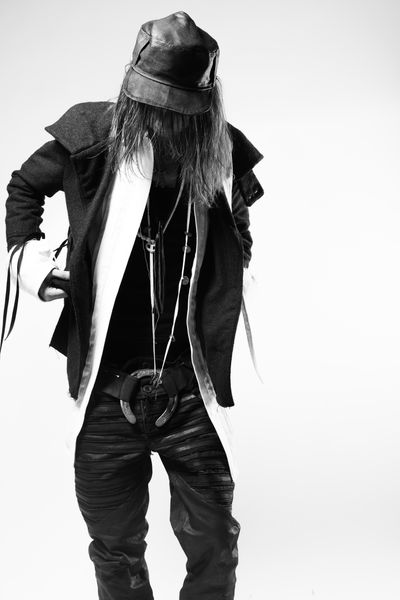
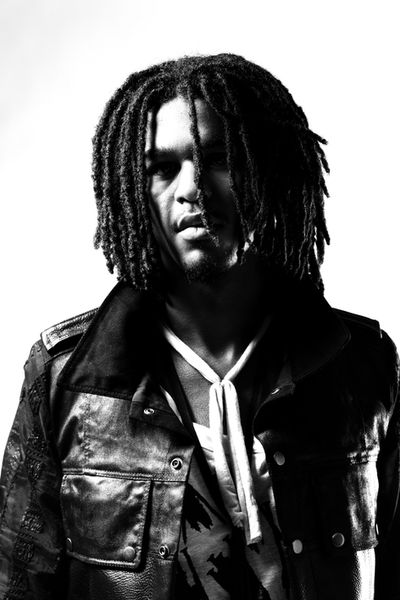
The editorial studio shoot shifts Bury Me In The Prairie into a different register—one driven by sound, movement, and release. While the collection is rooted in stillness and reflection, this series pulls forward its folk rock undercurrent, capturing the energy that lives beneath the surface.
Shot against a stripped-back studio environment, the absence of landscape allows the garments to take on a new intensity. Movement becomes the language—bodies in motion, fabric reacting, silhouettes breaking their own structure. The clothes are no longer quiet artifacts, but active participants, charged with a sense of rhythm and spontaneity.
There is a looseness here that contrasts the restraint of the prairie. Gestures feel instinctive, almost performative, as if pulled from a stage or a fleeting moment between songs. In this space, the collection reveals its other side: not just shaped by stillness, but by the energy of expression, sound, and youth in motion.




We all have a song. A song comes spontaneously, expressing joy, loneliness, to dispel fear or exhibit a small triumph. We hardly notice we are forming them, as we sing them, often alone, half to ourselves.
It is finding the words within that leads us to sing. It might be a hymn, a shard of rebellion, or a teenage prayer. We discover inspiration where we may, in an old guitar in the corner of a garage, under a bed, or hanging in a pawnshop window. In a phrase carried to us by the wind, walking along. In the reflection we see of ourselves in the mirror. Sometimes we recognize our song in the song of another. It is the miracle of the popular song, songs that are beloved universally, often in their simplicity.